


Our Medical Technology
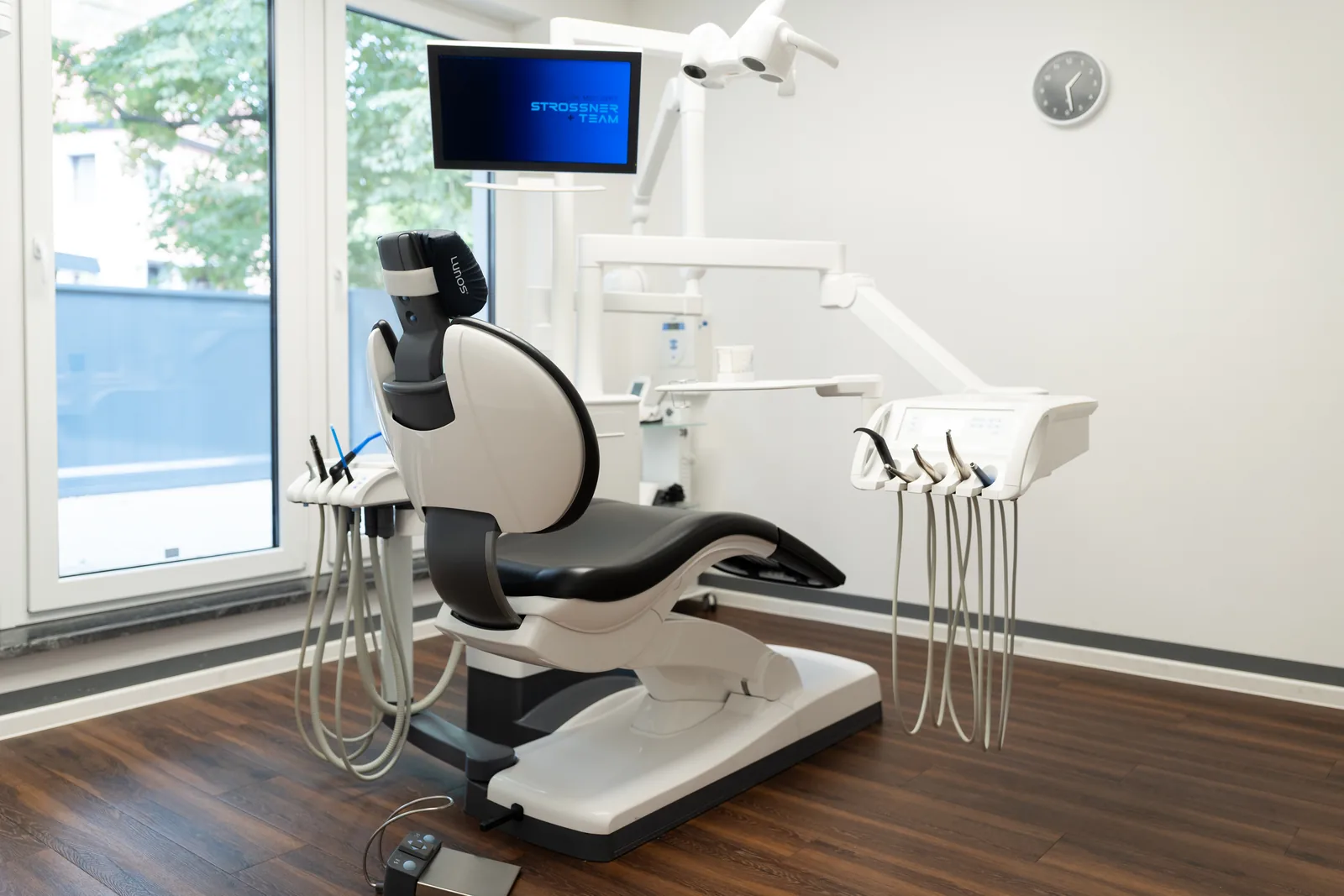
From X-ray to finished tooth, with no detours
For us, digital does not mean “modern for technology's sake” – it means fewer impressions, fewer appointments and fewer surprises.
Who treats you
Dr. med. dent. M.Sc. Sandro Strößner – working in implantology since 2013 · M.Sc. in Oral Implantology and Periodontology – together with the team at Zahnkompetenzzentrum Weißenfels.
First Appointment
Consultation, medical history and examination (3D X-ray if needed) – we plan first and treat later. A pure information meeting without examination is non-binding; the examination and the cost plan are charged according to the GOZ fee schedule.
Costs
A written treatment and cost plan before treatment begins; an initial, non-binding price range is provided by the cost calculator further down.
First Step
Appointments online around the clock (“Appointment” button) or by phone during opening hours on 03443 339 65 54.
“The Master of Science in Oral Implantology and Periodontology is a postgraduate qualification pathway in implantology. Dr. med. dent. M.Sc. Sandro Strößner obtained it over several years alongside his professional practice.”
The Principle
Cone-beam CT scan, intraoral scans, structured assessment. The first appointment isn't treatment — it's a conversation backed by data.
From the final dental prosthesis back to the surgery. What should exist at the end determines the first step — not the other way round.
One team under one roof: surgery, prosthetics, laboratory.
Our Medical Technology
For us, digital does not mean “modern for technology's sake” – it means fewer impressions, fewer appointments and fewer surprises.
01
03
05
Our standard: every implant is digitally planned, generally placed with navigation, and restored prosthetically so that function, ease of cleaning, and aesthetics are right.
Short videos in which our team answers the questions we're asked most often. No jargon, no sales pressure.
The videos provide general information and do not replace individual advice or examination. The course and outcome of treatment depend on personal circumstances; medicine offers no guarantee of success. All videos have subtitles.
Specialist Field: Implantology
Implantology is far more than placing a screw in the jaw. It is a distinct, demanding sub-discipline of dentistry that brings together surgical skill, prosthetic thinking, sound knowledge of bone and soft-tissue biology, and forward-looking planning within a single treatment concept. At the Zahnkompetenzzentrum Dr. med. dent. M.Sc. Sandro Strößner in Weißenfels, we understand implantology as an interdisciplinary craft, in which restoring function, chewing comfort and aesthetics are all equally central.
A dental implant replaces the natural tooth root. It is placed in the jawbone, where it serves as a stable foundation for a crown, bridge or removable denture. This makes implant treatment fundamentally different from classic dental prosthetics, which rely on neighbouring teeth or the mucosa for support. The discipline of implantology deals with every question surrounding this replacement of the root: from diagnostic assessment beforehand, through surgical insertion, to the long-term maintenance of the implant.
In Germany, any licensed dentist may, in principle, place implants. Implantology as recognised by the professional societies, however, goes well beyond basic university training. It requires structured further training, documented treatment experience and a willingness to engage continuously with new materials, procedures and scientific findings.
Our practice looks at every case from the perspective of the entire chewing system. An implant should never be viewed in isolation, but always in relation to the natural teeth, the bite, the gums and the individual patient's particular life situation. This holistic perspective is the foundation of our work in Weißenfels.
Qualifications & Continuing Education
Dr. Strößner holds the academic degree of Master of Science (M.Sc.) – a part-time, multi-year postgraduate programme that provides in-depth knowledge of oral implantology and periodontology.
The German Society of Implantology (DGI) is the largest scientific society for implantology in the German-speaking countries. Dr. Strößner has been a member of the DGI since 2019.
Implantology is a field in constant development. Implant surfaces, digital planning software, augmentation materials and surgical protocols keep evolving. We deliberately invest in regular further training, collegial exchange and the critical evaluation of new procedures. Not every technical innovation is automatically progress – which is why we carefully assess which methods offer genuine added value for our patients in Weißenfels.
We place great importance on our patients understanding who is treating them and on what professional basis decisions are made. We answer questions about qualifications openly at any time – by phone on 03443 339 65 54, or in a personal consultation.
Range of Treatments
The treatment spectrum of modern implantology ranges from replacing a single lost tooth to the complete rehabilitation of an edentulous jaw. At our practice in Weißenfels, we plan every restoration individually – based on the patient's specific starting situation, wishes and medical circumstances.
If a single tooth is missing, an implant is a solution that spares the neighbouring teeth. With a conventional bridge, the adjacent, often healthy teeth would need to be ground down. An implant, by contrast, stands on its own, carries the new crown independently, and transfers chewing forces directly into the jawbone. This helps to load the bone functionally at that site and counteract its natural resorption.
If several teeth next to one another are missing, or if there is no longer an abutment tooth at the end of the row, we refer to these as intercalary or free-end gaps. In these cases, implant-supported bridges can provide a fixed restoration, without the need for a removable partial denture. We plan the number and position of the implants so that chewing forces are evenly distributed.
Even a completely edentulous jaw can be treated with implants. There are two basic approaches here: an implant-supported, removable denture, stabilised by a small number of implants and offering secure hold; or fixed bridge constructions, anchored on several implants, allowing a fixed set of teeth without a palatal plate. Which route is right depends on the available bone, ease of cleaning, personal wishes and budget – we weigh this up together.
For each of these types of treatment: only precise diagnostics and a conversation about your expectations lead to the right treatment plan.
Digital & Navigated Techniques
Digitalisation has fundamentally changed implantology. Where much used to depend on experience and judgement by eye, large parts of treatment can today be planned and simulated in three dimensions and then implemented precisely. At our practice, we use digital methods to determine the position of every implant in advance – taking into account the available bone, the course of nerves, the maxillary sinus, and the prosthetic restoration to come.
With navigated or template-guided implant placement, the implant position planned on the computer is transferred exactly into the mouth using an individually made surgical guide. This can increase the predictability of the procedure and make it gentler. Below, we outline the typical course of digitally planned implant treatment:
Digital planning creates transparency: many steps can be visualised and discussed in advance, so that you can understand what is planned for you. What matters to us is that technology serves the person – professional judgement and clinical responsibility always remain with the treating clinician.
Bone Augmentation
An implant needs sufficient bone to be anchored securely. However, after tooth loss, the jawbone gradually recedes over time, as it no longer receives the natural loading from chewing. Inflammation, accidents or anatomical features can likewise mean that there is not enough bone at the desired site. In such cases, augmentation procedures are used – methods for building up or widening the bone.
Which procedure is suitable depends on how much bone is missing and where. For smaller defects, an accompanying graft carried out directly as part of the implant placement is often sufficient. For larger defects, a separate, preliminary procedure may make sense. We make this choice after careful 3D diagnostics.
The patient's own bone, high-purity bone substitute materials, or combinations of the two may be considered as graft materials. Each material has its own properties, advantages and disadvantages, which we explain to you in an understandable way. Bone grafting requires an appropriate healing period, during which the new tissue stabilises before the implant is permanently loaded.
Important to know: not every case needs a bone graft. Skilful planning of the implant position can often avoid the need for augmentation or reduce it. Only a precise analysis of your jaw shows what is really necessary.
Immediate Implant Placement & Treatment Timelines
One of the most common questions from our patients in Weißenfels is: how long does all this take? The answer depends on the timing concept chosen. Implantology generally distinguishes between immediate, early and late implant placement – depending on how much time passes between tooth extraction and placing the implant.
With immediate implant placement, the implant is inserted into the same tooth socket immediately after a tooth that cannot be saved is removed. This saves a separate procedure and can shorten the overall treatment time. However, it requires favourable conditions: an environment free of inflammation, sufficient bone, and good primary stability. Not every case is suited to this approach – we make the decision individually, based on the findings.
Immediate restoration should be distinguished from immediate implant placement: here, the implant receives a provisional crown shortly afterwards, so the gap does not remain visible. Whether immediate restoration is possible depends largely on the stability of the implant in the bone. In many cases, a conventional, delayed loading approach, in which the implant is first allowed to heal undisturbed, is the more predictable path.
Healing – the firm bond between implant and bone, known technically as osseointegration – generally takes several months. This time is well invested, as it creates the foundation for the later load-bearing capacity. We give you honest advice on which timeframe makes sense in your situation.
Risks, Aftercare & Costs
Genuine advice on implants also means talking about possible risks and about the long-term responsibility that comes with an implant. An implant is not a one-off event, but the beginning of an ongoing relationship of care and check-ups.
Like any surgical procedure, implant placement carries risks. These include swelling, temporary discomfort and, in rare cases, infection, impaired wound healing or failure to integrate. Peri-implantitis plays a particular role – an inflammation of the tissue around the implant that, if left untreated, can lead to implant loss. Underlying medical conditions, smoking and inadequate oral hygiene can affect healing and long-term stability. We explain all of these aspects to you in detail before every procedure.
Even carefully performed implant work only lasts if it is consistently cared for. Thorough oral hygiene at home and regular professional check-ups are crucial for detecting inflammation at an early stage. In our practice we rely on a structured aftercare concept that is matched to your restoration.
The cost of implant treatment cannot be stated as a flat rate – it depends on the number of implants, the work involved in any bone augmentation, the material chosen, and the prosthetic restoration. Statutory health insurers generally do not cover the cost of the implant itself; however, they do grant a fixed subsidy based on the diagnosis for the dental prosthetics that sit on the implant. This subsidy can increase if a dental bonus booklet (Bonusheft) has been kept up to date. Private health insurers and supplementary insurers reimburse implant treatment differently depending on the tariff. Before treatment begins, we prepare a transparent, written treatment and cost plan for you, which you can submit to your health insurer – so you know in advance what costs to expect.
Feel free to ask us about instalment payment options and any funding or bonus schemes. Our goal is treatment that is convincing from a clinical standpoint and remains financially manageable for you.
Implantology in Weißenfels
For implant treatment, patients from Weißenfels and the Burgenlandkreis do not need to travel long distances to larger cities. At the Zahnkompetenzzentrum Dr. med. dent. M.Sc. Sandro Strößner, we bring diagnostics, planning, surgical treatment and prosthetic restoration together under one roof. This shortens journeys, makes coordination easier, and creates continuous care from the initial consultation through to aftercare.
The short journey from the surrounding area is a practical advantage, especially for surgical procedures: check-up appointments and aftercare are easy to attend. Where it makes sense, we work on an interdisciplinary basis with specialised colleagues and our in-house master laboratory, in order to treat even demanding cases to a high standard.
Every course of implant treatment begins with a detailed, no-obligation consultation. Here, we take the time to understand your situation, answer your questions, and weigh up the possible options together. You then decide, calmly and without pressure, whether and how you would like to proceed.
Book your appointment by phone on 03443 339 65 54. Our team will advise you in a friendly manner and take the time for your concerns – so that you can make a well-founded, well-informed decision about your dental prosthetics.

The Master of Science in Oral Implantology and Periodontology is a postgraduate qualification pathway in implantology. Dr. med. dent. M.Sc. Sandro Strößner obtained it over several years alongside his professional practice.
What convinced me was the absence of marketing. No promises. Just planning, explanation, execution. I had eight implants placed and didn't even feel like I'd made a difficult decision.
At the Zahnkompetenzzentrum
in Weißenfels
Fixed Dental Restoration on Your Own Root
Immediate Treatment of the Jaw
All Services at a Glance
No-Obligation Cost Calculator
Process, Technique, Immediate Treatment
Upload your cost plan, call-back within two working days
Computer-navigated implant placement in real time. See how an implant procedure takes place at our Zahnkompetenzzentrum.
This video contains no spoken content. The audio track consists solely of subtle background music — no spoken or meaning-bearing audio information is lost.
Answer a few short questions and you’ll immediately receive a transparent price range for your situation — complete with a clear breakdown and possible monthly instalment.
As a rule X-Guide 3D-navigated & minimally invasive. We plan your implant on the computer and, as a rule, place it with navigation to within a millimetre — through a particularly small, tissue-sparing access point. This extra effort is already built into every price.
You now know your approximate investment. In the information consultation we clarify which restoration makes sense for your case – and whether there might be a simpler way.
A no-obligation information meeting, without treatment. Examination, any necessary X-ray diagnostics and the written treatment and cost plan are carried out according to medical indication and charged under the GOZ; we tell you the costs in advance. You decide at your leisure.
A non-binding estimate for initial guidance only — not a treatment and cost plan, and no substitute for a personal consultation. The actual cost depends on your individual findings and is set out in a written treatment and cost plan showing the expected costs.
Get practical dental health tips and news from our practice — free, and you can unsubscribe at any time.
